

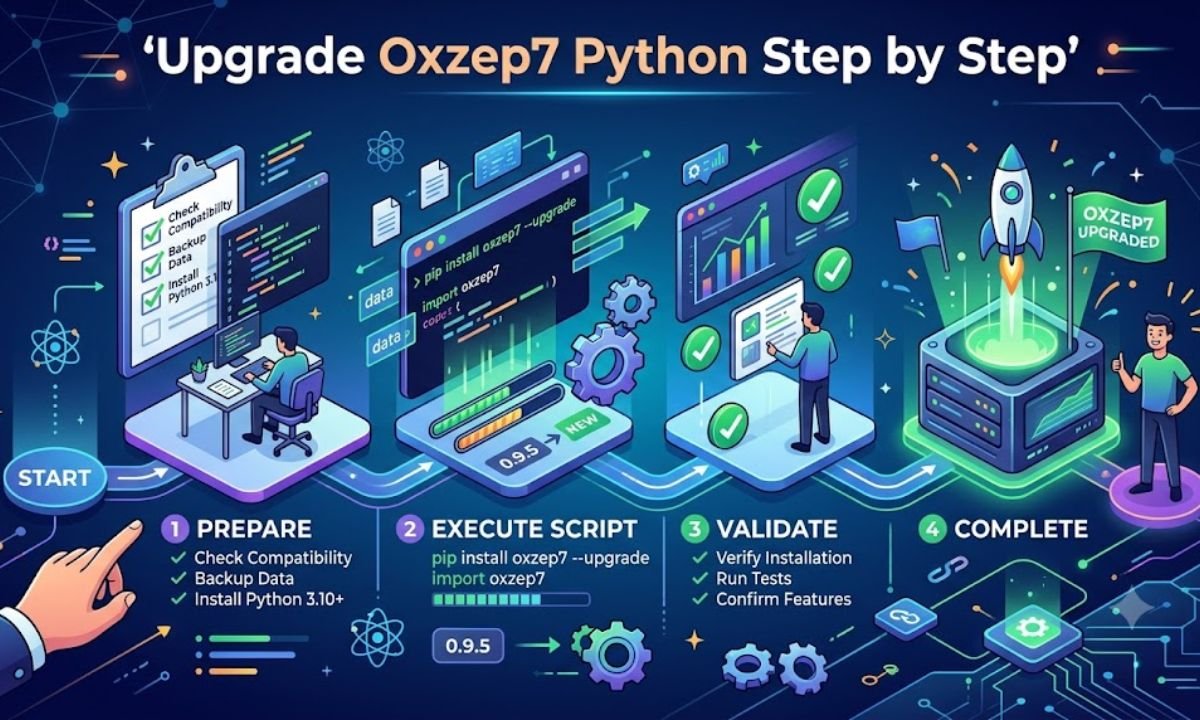
Upgrading a Python environment often feels risky, especially when critical applications depend on stable performance. Many organizations postpone updates because they worry about compatibility issues, downtime, and unexpected failures. However, a structured approach makes the Upgrade Oxzep7 Python process safer, faster, and easier to manage across modern systems.
A successful Oxzep7 Python upgrade is more than installing a newer interpreter version. It involves reviewing dependencies, validating configurations, testing applications, and strengthening security controls. When done correctly, the upgrade improves performance, reduces technical debt, increases software scalability, and creates a stronger foundation for future development and maintenance.
What Does Upgrade Oxzep7 Python Mean?
The term Upgrade Oxzep7 Python generally refers to modernizing a Python-based environment, framework, or runtime configuration. It includes updating the Python interpreter, refreshing libraries, improving security settings, and ensuring compatibility with modern development tools.
This process goes beyond a simple version update. A complete Python environment upgrade often includes dependency reviews, code refactoring, environment validation, and infrastructure modernization. Organizations that approach upgrades strategically experience greater operational efficiency and long-term system reliability.
Understanding the Oxzep7 Python Environment
An Oxzep7 Python environment usually combines custom scripts, internal modules, configuration layers, and third-party packages. These components work together to support specific business processes. Understanding every element before upgrading helps prevent unexpected compatibility issues and deployment failures.
What Changes During an Oxzep7 Python Upgrade?
Several areas change during the upgrade process, including interpreter versions, dependency packages, runtime settings, and security configurations. Teams also update deployment workflows, monitoring tools, and automation pipelines to maintain compatibility across the entire software ecosystem.
Benefits of Modernizing Oxzep7 Python Systems
Modernization improves system stability, strengthens security, and enhances development workflows. Organizations gain access to modern Python libraries, faster execution speed, better memory management, and improved maintainability. These advantages help support scalable architecture and long-term software lifecycle management.
Related Post: TheLaptopAdviser Expert Gaming Laptop Review Guide 2026
Why You Should Upgrade Oxzep7 Python
Running a legacy environment creates hidden risks that grow over time. Older Python versions lose library support, accumulate security vulnerabilities, and become harder to maintain. Delaying upgrades often increases future migration complexity and operational costs.
Organizations across the United States increasingly prioritize secure Python infrastructure because cybersecurity threats continue evolving. A well-planned upgrade roadmap helps businesses improve application performance while maintaining compliance and reducing infrastructure risks.
Security Improvements
New Python releases address unpatched vulnerabilities, outdated cryptographic functions, and known security weaknesses. Upgrading reduces attack surface exposure and strengthens protection against emerging threats. This remains one of the most important reasons organizations invest in regular Python system maintenance.
Performance Enhancements
Modern interpreter versions deliver better execution speed, improved memory management, and optimized resource utilization. These enhancements support Python performance optimization, allowing applications to process workloads more efficiently while consuming fewer system resources.
Compatibility With Modern Libraries
Many popular packages eventually stop supporting older Python releases. Upgrading ensures continued access to library support, bug fixes, and feature improvements. This reduces dependency conflicts and improves runtime compatibility across development and production environments.
Long-Term Maintainability
Outdated environments increase technical debt and complicate troubleshooting efforts. Modern systems are easier to document, support, and scale. Upgrading helps teams maintain cleaner codebases while improving overall software maintenance and future development flexibility.
Pre-Upgrade Checklist for Oxzep7 Python
Preparation determines whether an upgrade succeeds or fails. Most migration problems occur because teams skip planning stages. A detailed upgrade checklist reduces risk and creates a predictable path toward successful implementation.
Before making any changes, gather complete information about the current environment. Understanding dependencies, configurations, and deployment workflows helps prevent disruptions and supports a smooth Python environment migration.
| Pre-Upgrade Task | Purpose |
| Environment Audit | Identify dependencies and configurations |
| Source Code Backup | Protect application data |
| Database Backup | Enable recovery if needed |
| Release Notes Review | Discover compatibility issues |
| Test Environment Setup | Validate changes safely |
Audit the Current Environment
Document installed packages, interpreter versions, environment variables, and deployment settings. Strong Python dependency management begins with complete visibility into the existing infrastructure. This information becomes essential during troubleshooting and rollback procedures.
Backup Everything
Create backups for source code, databases, configuration files, and deployment scripts. A reliable Python rollback strategy depends on accurate recovery points. Without proper backups, even minor upgrade failures can lead to significant operational disruptions.
Review Release Notes
Release notes reveal important changes between interpreter versions. They often highlight deprecated syntax, compatibility fixes, performance improvements, and security updates. Reviewing this information early helps teams prepare for potential migration challenges.
Create a Test Environment
Never upgrade directly in production. A dedicated Python staging environment allows safe testing before deployment. Teams commonly use virtual machines, cloud instances, or Docker containers to replicate production conditions without risking business operations.
Build a Risk Assessment Plan
Every upgrade carries some level of risk. Identify critical applications, evaluate potential downtime scenarios, and assign responsibilities across team members. Clear planning improves communication and reduces confusion throughout the migration process.
Step-by-Step Process to Upgrade Oxzep7 Python
A structured process helps organizations minimize errors and maintain stability. Each phase builds upon previous work. Skipping steps may create compatibility issues that become difficult to diagnose later.
Following a proven Python upgrade process ensures that every component receives proper validation. This approach improves deployment confidence and reduces unexpected production incidents.
Install the Target Python Version
Choose a stable interpreter release supported by your application’s dependencies. Install the new version alongside the existing environment whenever possible. Parallel installations provide flexibility and simplify rollback procedures if unexpected issues appear.
Create a Fresh Virtual Environment
A clean Python virtual environment setup eliminates hidden conflicts from older installations. Fresh environments provide consistent testing conditions and improve reliability throughout the migration process. Avoid reusing outdated virtual environments whenever possible.
Reinstall Dependencies
Install packages using dependency lock files or documented requirements lists. Resolve compatibility issues systematically and replace unsupported libraries with maintained alternatives. Careful package management reduces deployment problems and improves long-term maintainability.
Update Oxzep7-Specific Components
Review custom scripts, internal modules, APIs, and configuration layers. Some components may require code refactoring or compatibility updates. Testing these elements individually helps isolate problems before full system integration begins.
Run Automated Tests
Comprehensive automated Python testing should include unit testing, integration testing, and performance benchmarks. Automated validation quickly identifies failures and ensures critical business functionality continues operating after the migration.
Common Challenges During an Oxzep7 Python Upgrade
Even well-planned upgrades encounter obstacles. Understanding common issues helps teams respond quickly and minimize disruptions. Most challenges involve dependencies, configuration mismatches, or outdated code patterns.
Rather than treating problems as failures, view them as expected parts of the process. Proper preparation and testing significantly reduce the impact of upgrade-related issues.
Dependency Conflicts
Conflicts occur when packages require incompatible versions of shared dependencies. Dependency tree visualization tools help identify problematic relationships. Resolving these conflicts early prevents runtime errors and deployment failures later.
Deprecated Syntax
Older applications often contain deprecated syntax that no longer works in newer interpreter versions. Code refactoring and automated linting tools help identify outdated patterns. Addressing these issues improves maintainability and future compatibility.
Environment Variable Changes
Configuration settings sometimes behave differently after upgrades. Incorrect environment variables can cause application failures, authentication issues, or unexpected runtime behavior. Validate every configuration setting carefully before production deployment.
Performance Regressions
Although upgrades usually improve performance, regressions occasionally occur. Compare performance benchmarks before and after migration. Profiling tools help identify bottlenecks and guide optimization efforts when unexpected slowdowns appear.
Best Practices for a Successful Upgrade Oxzep7 Python Strategy
A successful Upgrade Oxzep7 Python project requires more than technical expertise. It also depends on planning, documentation, automation, and monitoring. Organizations that follow proven upgrade practices experience fewer disruptions and achieve better long-term results.
Building repeatable upgrade procedures helps teams handle future migrations more efficiently. Consistent processes reduce operational risks, improve collaboration, and strengthen overall system reliability across enterprise environments.
Automate Where Possible
Automation reduces human error and improves deployment consistency. Use CI/CD pipelines, dependency lock files, and automated validation scripts to streamline repetitive tasks. Automated workflows support Python deployment optimization and improve overall development efficiency.
Upgrade Incrementally
Avoid skipping several major interpreter releases at once. Incremental Python upgrades simplify troubleshooting and reduce compatibility risks. Smaller upgrades allow teams to validate each stage carefully before moving to the next version.
Document the Process
Record every configuration change, issue encountered, and solution applied during migration. Detailed documentation supports future upgrades and improves knowledge sharing. Version control systems help maintain accurate records across development teams.
Monitor After Deployment
Effective Python deployment monitoring includes tracking logs, application metrics, resource usage, and error reports. Early detection allows teams to resolve issues before they impact users. Continuous monitoring strengthens production environment stability.
Establish a Future Upgrade Policy
Create a long-term upgrade roadmap that includes scheduled reviews, security updates, dependency assessments, and infrastructure audits. Proactive maintenance prevents technical debt accumulation and supports sustainable software lifecycle management.
Post-Upgrade Optimization Tips
Completing the upgrade is only part of the journey. Post-upgrade optimization helps organizations maximize performance gains and improve overall system efficiency. These activities ensure the environment remains secure, stable, and scalable.
Teams that optimize after deployment often discover additional opportunities for performance improvements, code simplification, and infrastructure modernization. Small adjustments can deliver significant operational benefits over time.
Remove Unused Dependencies
Unused packages increase maintenance requirements and security risks. Removing unnecessary libraries reduces system complexity and minimizes potential attack vectors. A lean environment is easier to maintain and troubleshoot.
Enable New Python Features
Modern interpreter releases introduce features that improve readability, productivity, and execution efficiency. Taking advantage of these capabilities helps teams modernize workflows and improve application performance.
Refactor Legacy Code
Code refactoring improves readability, maintainability, and runtime efficiency. Replacing outdated patterns with modern practices reduces future maintenance costs and improves compatibility across the Python ecosystem.
Strengthen Security Configurations
Review authentication settings, encryption standards, access controls, and network policies after deployment. Strengthening security configurations supports secure deployment practices and improves overall infrastructure protection.
Improve Scalability After the Upgrade
Evaluate resource allocation, load balancing, caching strategies, and containerization opportunities. These improvements support scalable architecture and help applications handle growing workloads efficiently.
Quick Upgrade Roadmap Table
| Phase | Key Objective | Expected Outcome |
| Assessment | Audit environment | Complete visibility |
| Preparation | Backups and testing | Reduced risk |
| Installation | Upgrade interpreter | Modern runtime |
| Validation | Automated tests | Stable deployment |
| Optimization | Refactor and monitor | Better performance |
| Maintenance | Ongoing updates | Long-term reliability |
Frequently Asked Questions
What is the safest way to upgrade Oxzep7 Python?
The safest method involves creating a test environment, backing up all critical assets, reviewing release notes, and running automated tests before production deployment. This approach minimizes downtime and reduces migration risks.
How long does an Oxzep7 Python upgrade typically take?
Small environments may require only a few hours. Larger enterprise systems with extensive dependencies, custom modules, and integration requirements often require several days of planning, testing, and deployment validation.
Can I upgrade Oxzep7 Python without a test environment?
Although technically possible, it is not recommended. A staging server helps identify compatibility issues, configuration errors, and performance concerns before they affect production users and business operations.
Which Python version should I choose?
Select a stable release that receives active support and works with your required dependencies. Review package compatibility carefully before choosing a target version for migration.
How do I handle incompatible packages?
You can update the package, replace it with a maintained alternative, or isolate the component temporarily. Proper dependency management helps prevent unsupported libraries from delaying upgrades.
Will upgrading affect existing virtual environments?
Yes. Existing virtual environments are tied to specific interpreter versions. Creating a fresh Python virtual environment setup ensures compatibility and removes conflicts associated with older environments.
What should I do if the upgrade fails?
Use your backup files and rollback strategy to restore the previous environment. Thorough preparation and tested recovery procedures significantly reduce downtime during unexpected failures.
How often should Oxzep7 Python be upgraded?
Most organizations review interpreter versions and dependencies at least once or twice annually. Regular updates improve security, maintain compatibility, and reduce future migration complexity.
Can upgrading improve application performance?
Yes. Newer interpreter versions often deliver improvements in execution speed, memory management, and resource utilization. Performance gains depend on workload characteristics and application design.
What are the biggest upgrade risks?
Common risks include dependency conflicts, deprecated syntax, configuration errors, integration failures, and inadequate testing. Most issues become manageable when addressed through careful planning and validation.
Final Thoughts
Upgrading Oxzep7 Python is not simply a technical task. It is an investment in security, performance, scalability, and future growth. Organizations that maintain current environments experience fewer vulnerabilities, better application stability, and stronger operational efficiency.
By following a structured Python upgrade process, implementing automated testing, maintaining reliable backups, and monitoring deployments carefully, teams can complete upgrades confidently. A well-executed Upgrade Oxzep7 Python strategy creates a secure, scalable, and future-ready foundation that supports long-term success across modern software environments.

Zain Seo is a versatile content writer specializing in multi-niche articles, blog posts, and SEO content. I believe in writing with clarity, creativity, and purpose to deliver content that truly adds value.