

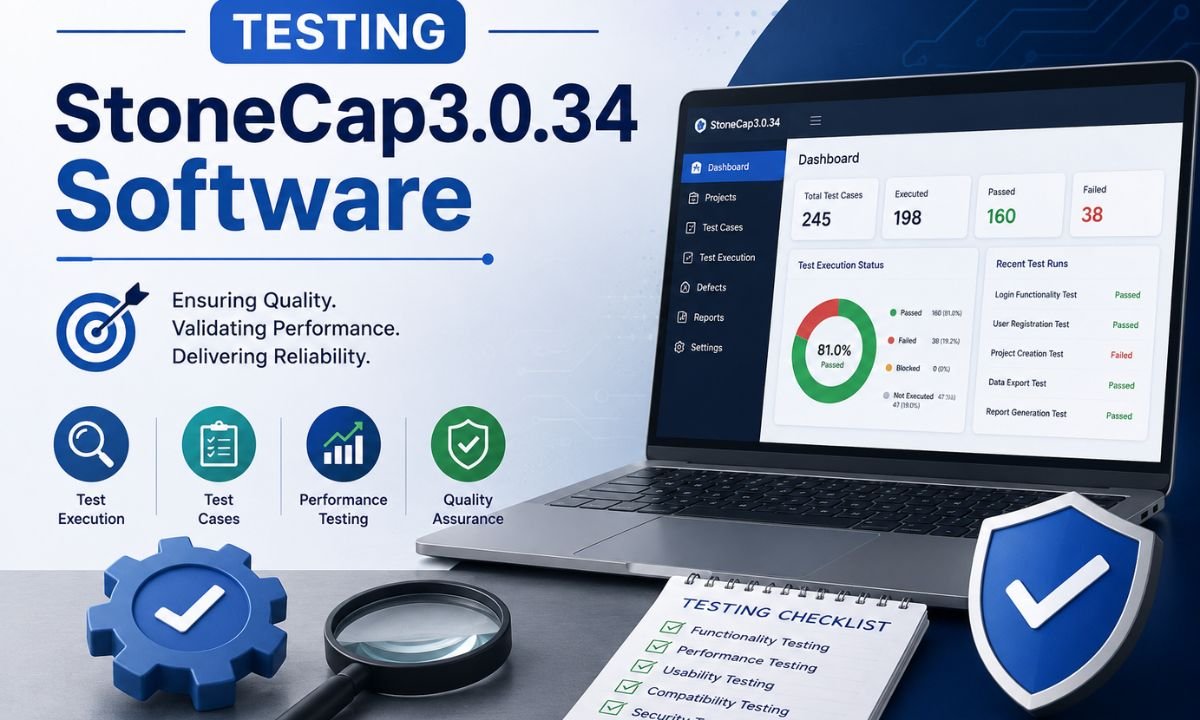
Shipping software without proper testing is like driving cross country with no spare tire. Sooner or later, something gives out. Testing StoneCap3.0.34 software gives US development teams a structured way to catch problems early.
This guide breaks down everything from setup to advanced strategy. You’ll learn the software testing process, key methodologies, and software testing best practices that keep applications stable across every release cycle and deployment.
What is Testing StoneCap3.0.34 Software?
Testing StoneCap3.0.34 software means running an application through structured software validation methods. It checks functionality, stability, and performance using real user scenario testing instead of guesswork or assumptions.
US teams rely on it for software bug detection and application stability testing. It answers the practical question of how to test software effectively, giving teams measurable proof their app actually works.
Related Post: Upgrade Oxzep7 Python Step by Step: Best Practices for Secure and Scalable Systems
Key Features of StoneCap3.0.34 Software
StoneCap3.0.34 combines a test automation framework, CI/CD integration, and real-time analytics into one platform. These tools represent the best way to test StoneCap software without juggling five separate systems.
| Feature | Benefit |
| CI/CD testing pipeline | Continuous deployment workflows |
| Application performance monitoring | Live performance monitoring |
| Cross-platform testing | Works across OS, browser, device |
| Cloud-based testing environment | Scalable testing infrastructure |
| Test case management | Organized tracking and reporting |
Preparing for Testing StoneCap3.0.34 Software
Good prep separates smooth testing from chaos. Before running anything, check hardware requirements for testing, install dependencies, and back up your system fully.
| Requirement | Minimum Recommended |
| CPU | Quad-core 2.5 GHz+ |
| RAM | 16 GB |
| OS | Windows 10 / Ubuntu 20.04+ |
Skipping prep is one of the most common mistakes teams make. Proper software dependency installation and backups prevent costly failures once real testing begins in earnest.
Setting Up the Testing Environment
A solid testing environment setup builds the foundation for accurate results. Configure hardware correctly, stabilize your network, and install every required tool before starting any test run.
You’ll need automated testing tools, load testing tools, and solid debugging techniques. Pairing StoneCap3.0.34 with AWS testing environment options gives distributed US teams flexible, scalable testing infrastructure without buying physical servers.
Testing Methodologies for StoneCap3.0.34
No single method covers everything an application needs. Combining several approaches gives complete coverage across functional testing, performance testing, security testing, and usability testing categories.
System integration testing and user acceptance testing round things out further. Together, these methodologies confirm your application holds up under genuine real-world pressure and unpredictable user behavior.
Functional Testing
Functional testing validates that features behave exactly as promised. It checks inputs, outputs, and complete user workflows against documented requirements using structured test case management, helping teams systematically achieve real software bug detection across every build.
Performance Testing
Performance testing tracks software performance metrics like CPU usage, memory consumption, throughput, and latency. Load testing tools simulate real traffic spikes, helping teams catch performance bottleneck detection issues before launch day arrives.
Compatibility Testing
Cross-platform testing ensures consistent experiences across Windows, Mac, iOS, Android, and every major browser. Virtual machine testing and containerized testing environments simulate dozens of setups quickly, solving mobile device compatibility concerns before real users ever complain.
Security Testing
Security testing evaluates authentication testing, encryption validation, and access control verification systematically. For US businesses handling customer data, this isn’t optional. It’s the baseline every serious, trustworthy application must meet today.
Usability Testing
Usability testing observes real people navigating your interface. It surfaces friction points developers typically miss, directly supporting software quality improvement efforts. Small design fixes from this feedback often boost user satisfaction and adoption significantly.
Streamlined Test Management
Disorganized testing creates gaps nobody notices until it’s too late. StoneCap3.0.34’s test case management keeps every scenario tracked, assigned, and properly documented across the team.
A reliable bug tracking system pairs naturally with this setup. Together they support clean defect lifecycle management, from logging an issue through fixing, retesting, and closing it out.
Reporting and Metrics
Raw test data means little without clear interpretation behind it. StoneCap3.0.34 converts results into readable software testing reports that help teams and stakeholders make smart, informed decisions quickly.
Track pass and fail rate analysis, defect density, and mean time to detect issues consistently. When defect density spikes unexpectedly in one module, investigate it immediately. That pattern rarely lies.
Common Issues and Fixes
Even experienced teams hit roadblocks during setup or execution. Knowing frequent problems in advance saves hours of frustrating, avoidable troubleshooting later on.
| Issue | Fix |
| Installation troubleshooting | Check dependencies and permissions |
| Flaky test resolution | Add proper wait conditions |
| Compatibility conflicts | Update VM snapshots |
| Memory leak detection | Monitor resource usage closely |
Best Practices for Maximum Performance
Smart testing beats more testing every time. Integrate StoneCap3.0.34 into your CI/CD testing pipeline early, so issues surface within hours, not weeks later.
“Effective testing isn’t about finding bugs. It’s about preventing them.”
Automate repetitive scenarios, reuse modular test scripts, and prioritize automated regression testing consistently across every sprint and release cycle your team runs.
Real-World Use Cases
Case Study: E-Commerce. A US retailer used StoneCap3.0.34 for software deployment testing before Black Friday. Checkout load time dropped 40%, directly boosting completed purchases.
Case Study: Healthcare. A patient platform ran software reliability testing for HIPAA compliance. Zero critical failures occurred during the entire first year post-launch.
Case Study: IoT. A device company tested firmware across thousands of simulated endpoints. They caught three critical failures before pushing updates to live hardware.
Performance Analysis & Limitations
StoneCap3.0.34 excels at software performance optimization for mid-to-large applications. Most enterprise software testing teams find it fits naturally into existing development workflow automation without major friction.
Limitations exist too: high resource use during parallel runs, tricky legacy integrations, and a real learning curve for teams new to structured QA processes.
Advanced Tips & Tricks
Parallel test execution runs multiple suites simultaneously, cutting test execution optimization time significantly. Data-driven testing swaps hardcoded values for dynamic datasets, multiplying coverage without bloating your codebase.
AI-assisted defect prediction uses historical data and intelligent test analytics to flag risky modules ahead of time. This supports genuine continuous quality assurance across every release your team ships.
Frequently Asked Questions
What is StoneCap3.0.34 software used for?
It manages the full software testing process, covering functionality, performance, security, and usability so teams catch bugs before users ever do.
How do I set up a testing environment in StoneCap3.0.34?
Verify hardware, install dependencies, stabilize your network, then configure a cloud-based testing environment or local setup based on team size.
What testing methodologies does StoneCap3.0.34 support?
It supports functional, performance, compatibility, security, and usability testing, plus system integration testing and user acceptance testing for full coverage.
How does StoneCap3.0.34 handle performance testing?
It tracks CPU, RAM, throughput, and latency, while built-in load testing tools simulate peak traffic to catch bottlenecks early.
Is StoneCap3.0.34 suitable for small development teams?
Yes, though expect a learning curve initially. Starting with functional testing and automation before scaling up works well for most.
Can StoneCap3.0.34 integrate with CI/CD pipelines?
Absolutely. CI/CD integration is one of its strongest features, running tests automatically on every commit without manual overhead.
What are the most common issues with StoneCap3.0.34 testing?
Installation errors, flaky tests, and compatibility conflicts appear most. Careful log review and updated VM snapshots resolve most of them quickly.
Final Thoughts
Testing StoneCap3.0.34 software isn’t a one-time checkbox. It’s an ongoing habit that pays off across every release, every deployment, and every update cycle.
Teams that treat software quality assurance as core practice, not an afterthought, consistently ship more stable software. The tools exist. The strategy is clear. Now put them to work.

Zain Seo is a versatile content writer specializing in multi-niche articles, blog posts, and SEO content. I believe in writing with clarity, creativity, and purpose to deliver content that truly adds value.